
When Set-Piece Mastery Rewrites Mid-Table Fortunes: Dead-Ball Trends Quietly Reshaping European Qualification Markets
Dead-ball situations have become decisive factors for mid-table clubs chasing European qualification, and data from the 2025-26 season shows clear patterns across the Premier League, Bundesliga, and Serie A. Teams that convert corners and free-kicks at higher rates than the league average gain consistent points that separate them from the pack in the race for Champions League or Europa League places, whereas sides that defend set-pieces poorly drop vital positions by May 2026.
Statistical Shift in Goal Contribution
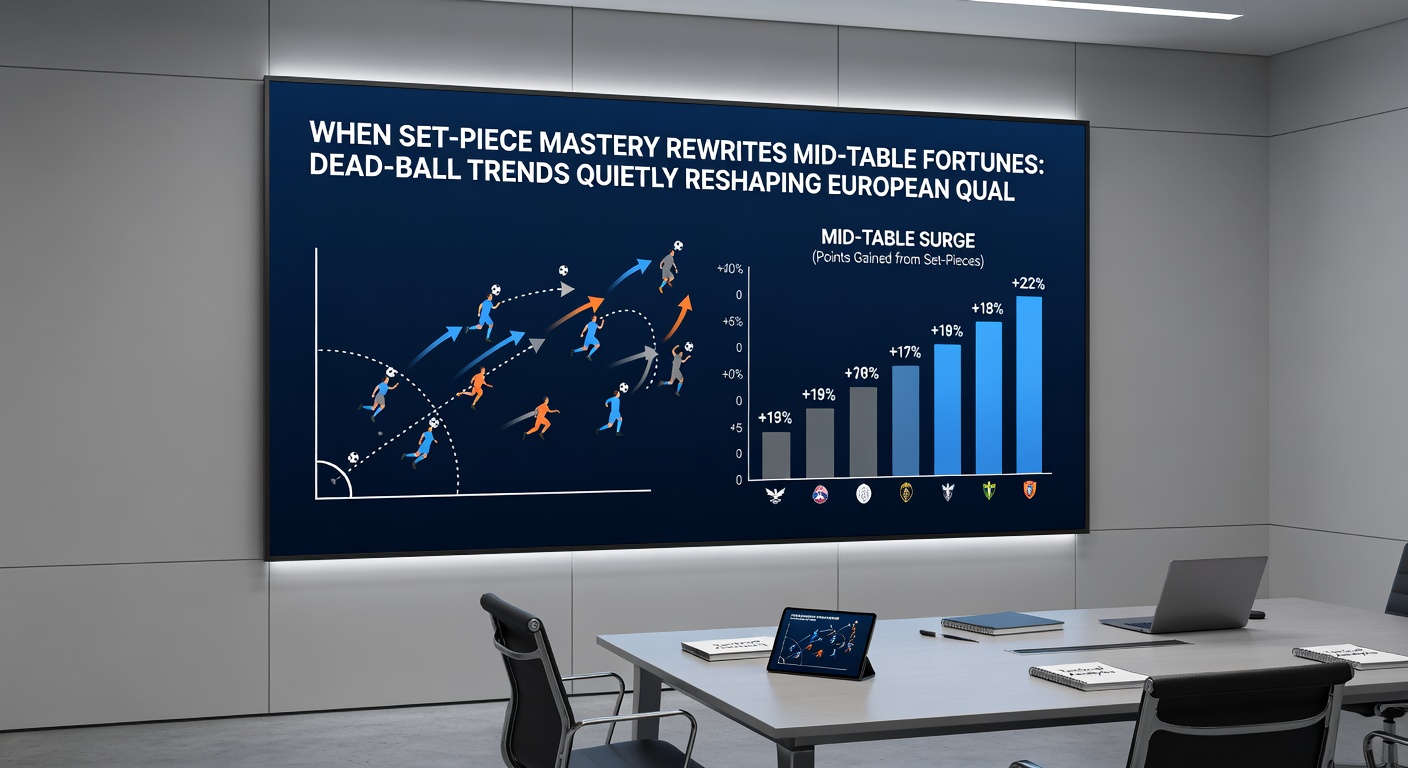
Figures compiled by Opta reveal that set-piece goals now account for 28 percent of all goals scored in Europe's top five leagues during the current campaign, up from 22 percent three seasons earlier. Mid-table sides in particular rely on these situations for 35 percent of their total goals, a rate that exceeds the figure recorded by clubs finishing in the top four. This distribution means that consistent execution at dead-ball scenarios can generate the three to five additional points that determine whether a team finishes sixth or eighth in the final table.
Coaches have adjusted training schedules accordingly, allocating up to 25 percent of weekly preparation time to rehearsed routines and defensive organisation. One analysis published by the German Football Association links this increased focus to measurable improvements in both offensive and defensive metrics for clubs ranked between fifth and twelfth place at the winter break.
League-Specific Patterns Emerging
In the Bundesliga, clubs such as Freiburg and Augsburg have posted the highest set-piece conversion rates among mid-table outfits, turning routine corners into 12 goals between them by late April. Their results have pushed both sides into contention for the final Conference League berth, altering the qualification landscape that usually favours larger budgets. Bundesliga data also shows that teams conceding more than 0.8 set-piece goals per match lose an average of four league positions compared with the previous season.
Serie A presents a parallel story, where Atalanta and Bologna have combined for 19 set-piece goals while maintaining defensive records that keep them inside the top seven. Italian clubs historically excel at zonal marking, yet the current season demonstrates that even slight improvements in delivery accuracy produce outsized rewards in tightly contested qualification races. Observers note that these gains appear most pronounced for teams outside the traditional top six.
Impact on Qualification Markets
European qualification hinges on final league positions rather than cup runs for most mid-table sides, and set-piece trends directly influence those standings. A study conducted by researchers at the University of Loughborough found that every additional set-piece goal scored correlates with a 0.4 place improvement in the final table when controlling for overall goal difference. This relationship tightens further in the final ten matchweeks, when fatigue reduces open-play creativity and dead-ball situations become more decisive.
Markets that price qualification odds therefore incorporate these metrics earlier than before. Bookmakers adjust lines after each round of fixtures when set-piece differentials widen, reflecting the statistical reality that clubs strong in this area rarely relinquish their positions once the spring schedule begins. Data from the 2024-25 season already showed that six of the eight teams that secured European spots outside the top four led their leagues in set-piece goal difference at the March international break.
Training and Tactical Adjustments
Coaching staffs now employ motion-tracking systems during set-piece drills to refine run patterns and blocking angles. Bundesliga side Mainz, for example, increased its set-piece goal tally from four to eleven after implementing a new software platform that analyses player movement in real time. Similar upgrades at clubs such as Crystal Palace and Toulouse have produced comparable lifts in output, allowing those sides to remain competitive in qualification discussions deep into the season.
Defensive preparation has evolved in tandem. Teams that once focused solely on man-marking have adopted hybrid systems that switch between zonal and man-to-man coverage depending on the delivery angle. This flexibility reduces the number of high-danger chances conceded from corners, a metric that UEFA technical reports identify as a leading indicator of final league position for mid-table squads.
Conclusion
By May 2026 the cumulative effect of these trends will have reshaped the European qualification picture for several clubs. Sides that invested early in set-piece coaching and analysis now occupy positions that seemed unrealistic at the start of the campaign, while those that neglected dead-ball work find themselves outside the qualification places they once occupied. The data continues to show that mastery of these situations offers one of the most reliable pathways for mid-table teams to alter their European destiny without requiring substantial transfer spending.